

If you’re asking yourself, “Why is my back burning in the middle?, the cause may be as simple as irritated muscles or prolonged positioning, but burning pain can also occur when nerves are irritated or with certain medical conditions.
The middle back, known as the thoracic spine, extends roughly from the base of the neck to the bottom of the rib cage. Because nerves, muscles, joints, ribs, and internal structures can all produce symptoms in this region, the sensation alone cannot tell you exactly what is causing it.
Most mechanical middle-back discomfort is not an emergency. However, persistent or unexplained burning pain, particularly when accompanied by chest pain, breathing difficulty, fever, weakness, numbness, a rash, or other unusual symptoms, deserves medical assessment.
A burning sensation in the middle of my back can potentially be associated with:
The location and character of pain are only part of the picture. What makes the symptoms better or worse, whether they spread around the chest or abdomen, and whether you have numbness, weakness, fever, breathing difficulty, or other symptoms can all help determine what should happen next.
A burning sensation in the middle of my back describes a symptom rather than a diagnosis.
People may describe the feeling as:
Sometimes the sensation is confined to a small area. In other cases, it may spread toward the shoulder blade, around a rib, or toward the front of the torso.
Burning pain is sometimes associated with nerve irritation, but it does not automatically mean a nerve has been damaged. Muscles and other tissues can also produce unusual pain sensations when irritated.
That is why treatment should be based on the likely underlying cause rather than the word “burning” alone.
The middle back is primarily formed by the thoracic spine.
It contains 12 vertebrae, labelled T1 through T12. Unlike the lumbar spine, the thoracic vertebrae connect with the ribs and contribute to the structure of the rib cage.
The region also contains:
This area is generally less mobile than the neck or lower back because of its relationship with the rib cage.
Pain perceived in the thoracic region does not necessarily originate from the vertebrae themselves. Muscles, ribs, nerves, skin, and sometimes structures elsewhere in the body can produce symptoms felt in the middle back.
When someone reports a burning sensation in the middle of my back, there are several possible explanations worth considering.
Muscular pain is one of the more straightforward possibilities.
Middle-back muscles may become irritated after:
The discomfort may be localized and change with movement.
You may also notice tenderness, tightness, stiffness, or aching around the same area.
A muscle does not have to be severely torn to become painful. Sometimes the tissues have simply been exposed to more work than they are accustomed to handling.
Sitting itself is not inherently damaging to the spine.
However, staying in almost any position for a long time can become uncomfortable.
People who spend several hours working at a computer may develop stiffness or discomfort between the shoulder blades or through the thoracic region.
Rather than searching for one perfect posture, it may be more useful to:
Postural variation is generally more realistic than attempting to hold your spine in one rigid position all day.
The thoracic vertebrae connect with the ribs through small joints.
These structures can become sensitive, particularly following unusual movement, repetitive loading, coughing, sports, or other physical activity.
Pain may change with:
Pain associated with breathing should not automatically be assumed to come from a rib or spinal joint, however. New or significant breathing-related symptoms should be assessed appropriately.
A burning sensation in the middle of my back may sometimes have a neurological component.
Nerve-related symptoms can include:
Thoracic spinal nerves travel around the torso between the ribs.
When a nerve is irritated, symptoms may occasionally extend from the back around one side of the chest or abdominal wall.
Persistent neurological symptoms should be medically assessed, particularly when accompanied by weakness, changes in walking, or bowel or bladder problems.
Disc problems are much more commonly discussed in the neck and lower back, but the thoracic spine also contains intervertebral discs.
A thoracic disc can degenerate, bulge, or herniate.
Not every disc change causes symptoms. Imaging studies can identify structural changes in people who have little or no pain.
When a thoracic disc problem does become symptomatic, it may potentially cause:
Because significant thoracic neurological symptoms require appropriate assessment, unexplained weakness, walking difficulty, or changes in bladder or bowel function should not be managed solely with home treatment.
If you have a burning sensation in the middle of my back, you might assume you have a “pinched nerve.”
The phrase is commonly used to describe symptoms caused by irritated or compressed nerve tissue.
However, burning pain alone cannot confirm nerve compression.
Nerve involvement becomes more plausible when burning is accompanied by symptoms such as:
A healthcare professional can assess your symptoms and determine whether further investigation is appropriate.
Yes.
Shingles is caused by reactivation of the varicella-zoster virus, the same virus responsible for chickenpox.
Pain, tingling, sensitivity, or burning may sometimes begin before the characteristic rash appears.
The rash typically develops on one side of the body and can follow the distribution of a nerve.
If you develop unusual burning skin pain followed by a painful or blistering rash, particularly on one side of the torso, contact a healthcare professional promptly. Antiviral treatment can be time-sensitive.
A new burning sensation in the middle of my back is not automatically a sign of something dangerous, but certain symptoms should not be ignored.
Seek urgent medical attention if middle-back pain occurs with:
Medical assessment is also appropriate for persistent or unexplained pain associated with:
These features do not automatically mean something serious is wrong. They simply make professional assessment more important.
If a burning sensation in the middle of my back persists or has concerning features, diagnosis normally begins with your symptoms and medical history.
A clinician may ask:
A physical examination may assess spinal movement, tenderness, strength, sensation, reflexes, walking, and other relevant features.
Not everyone with middle-back pain needs imaging.
When the results are likely to alter treatment or when symptoms raise questions about:
An MRI can provide detailed images of discs, nerves, the spinal cord, and other soft tissues.
However, symptoms and examination results must be interpreted in conjunction with imaging results. A structural change on a scan does not automatically prove that it is the source of pain.
Treatment depends on what is producing the symptom.
If serious and non-musculoskeletal causes have been appropriately excluded and the problem appears mechanical, conservative care may include the following.
Complete rest is rarely necessary for uncomplicated mechanical back pain.
During a painful flare, reduce activities that substantially worsen symptoms while maintaining comfortable movement.
This could include:
As symptoms settle, gradually increase your normal activity.
If your symptoms become worse after working at a desk, avoid focusing exclusively on achieving perfect posture.
Instead, try changing position more frequently.
For example:
A comfortable workstation is useful, but movement remains important.
Heat can feel soothing when the middle back is tight or stiff.
You might try:
Protect the skin and avoid excessive temperatures.
Heat can temporarily reduce discomfort, but it does not diagnose or correct the underlying cause.
Some people prefer a cold pack.
Cold may temporarily reduce discomfort through a numbing effect.
There is no requirement for everyone with mechanical back pain to use the same approach. Choose whichever feels more comfortable and can be used safely.
If serious causes have been excluded, gradually restoring comfortable movement can be useful.
Avoid repeatedly forcing the spine into painful end-range positions.
The goal is to regain comfortable movement, not to make the thoracic spine as flexible as possible.
Exercises may be useful when a burning sensation in the middle of my back is related to mechanical stiffness or muscular discomfort.
They are not appropriate substitutes for medical assessment when burning symptoms are caused by an unexplained neurological or medical condition.
Walking is simple but valuable.
It helps reduce prolonged periods in one position and keeps the body active.
Start with a comfortable time and progressively extend it.
Begin on your hands and knees.
Slowly round your spine before gently moving in the opposite direction.
Keep the movement comfortable rather than forcing maximum range.
Repeat slowly.
Sit comfortably with your feet supported.
Cross your arms loosely over your chest and rotate your upper body gently to one side.
Repeat in the opposite direction after returning to the center.
Avoid forcing the movement.
Bend your knees and hips comfortably while lying on your side.
Extend your arms in front of you.
Slowly rotate your upper arm and torso away from the starting position before returning.
Repeat on the other side.
The movement should feel controlled rather than aggressive.
Begin on your hands and knees.
Slowly extend one leg behind you.
As your control improves, extend the opposite arm simultaneously.
Return and repeat on the other side.
Resistance-band or cable rows can help strengthen the upper and middle back.
Pull the resistance toward you under control and return slowly.
Start with manageable resistance and gradually progress.
Stand comfortably against or near a wall.
Move your arms upward within a comfortable range before lowering them.
Do not force your shoulders or upper back into painful positions.
If a burning sensation in the middle of my back is associated with mechanical thoracic stiffness, you may wonder whether spinal decompression can help.
Spinal decompression is intended to provide a form of spinal unloading and movement.
It should not be presented as a universal treatment for burning pain because the symptom can have several causes.
Spinal decompression cannot treat:
For appropriately assessed mechanical back symptoms, gentle decompression may instead be considered as one part of a broader routine that includes movement and strengthening.
For a more detailed explanation of this region, see our guide to thoracic pain.
The Spinal Backrack is designed to encourage controlled spinal decompression at home.
For suitable mechanical symptoms, it may complement:
It should not be used as evidence that the cause of burning pain must be spinal.
If you are comparing home decompression options, our guide to the best spinal decompression device explains the different approaches and what to consider before choosing one.
Massage may provide temporary relief when symptoms are associated with muscle tension or soreness.
It may help some people feel more comfortable moving afterward.
However, massage should not be expected to:
If the skin itself feels unusually sensitive or a rash is developing, avoid assuming that the problem is muscular.
Physical therapy may be useful when a burning sensation in the middle of my back has been assessed as musculoskeletal and is affecting normal movement or activity.
A physical therapist may evaluate:
Treatment may involve exercise, education, gradual exposure to normal movements, and strategies for returning to work or sport.
The objective should generally be to increase physical capacity rather than create dependence on passive treatment.
Posture can influence how comfortable a position feels, but blaming back pain entirely on “bad posture” is usually too simplistic.
There is no single perfect posture that everyone must maintain.
Problems may be more likely when you remain in the same position for long periods, particularly if your body is not accustomed to it.
Rather than constantly forcing your shoulders backward or sitting rigidly upright, focus on:
Your best posture is not necessarily one fixed position.
Sitting for long periods may aggravate symptoms in some people.
This does not mean sitting damages your thoracic spine.
If desk work makes symptoms worse:
You should also gradually maintain or rebuild your tolerance for sitting rather than trying to avoid it completely.
Yes.
Stress does not mean the pain is imaginary.
Pain is influenced by many factors, including:
Stress can also increase muscle tension and make uncomfortable sensations more noticeable.
Regular movement, exercise, sleep, and appropriate stress-management strategies may therefore support overall recovery.
Sometimes.
A burning sensation in the middle of my back should not automatically be assumed to originate from the spine.
Certain conditions affecting structures in the chest or abdomen can produce pain that is perceived in the back.
This is why additional symptoms matter.
Seek appropriate medical assessment when back pain occurs with symptoms such as:
Trying repeated stretches or decompression exercises is not an appropriate substitute for assessment when symptoms suggest a non-musculoskeletal problem.
The area between the shoulder blades contains muscles, thoracic joints, ribs, nerves, and other structures that can become sensitive.
Symptoms in this region may occur after:
Burning between the shoulder blades can also occasionally occur with nerve or non-musculoskeletal conditions.
Persistent unexplained symptoms should therefore be assessed rather than automatically labelled a muscle problem.
Pain can sometimes feel more noticeable at night because there are fewer distractions, you remain in one position longer, or a particular sleeping position irritates an already sensitive area.
Occasional positional discomfort at night is different from significant unexplained night pain.
Persistent pain that regularly wakes you, continues regardless of position, or occurs alongside fever, unexplained weight loss, or other concerning symptoms deserves medical assessment.
There is no universally correct sleeping position for middle-back pain.
Choose the position that allows you to rest most comfortably.
You can experiment with
The position might be more comfortable with a pillow between the knees.
Some people prefer placing a pillow beneath the knees.
Your head and neck should feel comfortably supported rather than being forced into an uncomfortable position.
Good-quality sleep is more important than trying to maintain a theoretically perfect posture all night.
Whether exercise is appropriate depends on the cause.
If your symptoms have been assessed as mechanical and you do not have significant neurological or medical warning signs, maintaining appropriate activity is often useful.
You may initially need to modify:
Gradually rebuild these as symptoms improve.
If exercise causes new numbness, weakness, significant chest symptoms, or a major increase in unexplained burning pain, stop and seek appropriate assessment.
If you have a burning sensation in the middle of my back, avoid assuming that one specific movement, posture, or spinal structure must be responsible without considering the wider picture.
Common mistakes include:
Prolonged inactivity can make it more difficult to restore normal function when the problem is mechanical.
Trying to sit rigidly all day may simply replace one uncomfortable position with another.
More stretching is not necessarily better.
Persistent numbness, weakness, walking problems, or bladder and bowel changes require appropriate assessment.
Burning pain can have several possible causes.
Burning followed by a one-sided blistering rash may indicate shingles and should be medically assessed.
For mechanical symptoms, long-term management generally benefits from movement and progressive strengthening.
When serious and non-musculoskeletal causes have been excluded, recovery can be approached progressively.
Focus on:
Gradually introduce:
Progress toward:
Gradually restore:
The objective is to build capacity rather than spend the rest of your life protecting the middle back.
A burning sensation in the middle of my back may be associated with muscular irritation, sustained positions, thoracic joint or rib problems, nerve irritation, disc-related symptoms, shingles, or occasionally a non-spinal condition. The accompanying symptoms and clinical context are important for identifying the likely cause.
Yes, nerve irritation can produce burning, tingling, numbness, or electric sensations. However, burning pain alone does not prove that a nerve is compressed.
Remaining in one position for a prolonged period may contribute to discomfort, but there is no single “bad posture” responsible for all back pain. Changing positions regularly and maintaining physical activity are generally more useful than trying to maintain one perfect posture.
Yes. Shingles may initially cause burning, tingling, pain, or unusual skin sensitivity before a rash becomes visible. A painful or blistering rash, particularly on one side of the torso, should be medically assessed promptly.
A symptomatic thoracic disc problem can potentially cause local pain or neurological symptoms, but disc changes seen on imaging do not always cause pain. Imaging, examination results, and symptoms must all be taken into account.
Walking is often a useful way to maintain general activity when symptoms are mechanical. Start with a comfortable duration and increase gradually.
Spinal decompression may complement an active routine when symptoms have been appropriately assessed and are associated with mechanical spinal stiffness. It is not a treatment for unexplained neurological symptoms, shingles, infection, or internal-organ conditions.
The Spinal Backrack is designed to encourage gentle spinal decompression and comfortable spinal movement. It does not diagnose or treat every possible cause of burning pain and should only be considered when mechanical spinal symptoms are an appropriate target.
Seek medical assessment when symptoms are severe, persistent, worsening, or associated with weakness, numbness, walking difficulty, fever, unexplained weight loss, chest symptoms, breathing difficulty, a new rash, or significant trauma. New bladder or bowel dysfunction or saddle numbness requires urgent assessment.
There is no single recovery timeline because the symptom can have different causes. Mild mechanical irritation may improve over days or weeks, while nerve-related or medical conditions may follow very different courses.
Experiencing a burning sensation in the middle of my back can be uncomfortable and sometimes worrying, but the sensation does not point to one diagnosis by itself.
For uncomplicated mechanical symptoms, regular movement, walking, temporary modification of aggravating activities, mobility work, and progressive strengthening can form the foundation of recovery. Gentle spinal decompression may also complement that routine when mechanical thoracic stiffness is present and decompression is appropriate.
The more important first step is making sure the treatment matches the cause. Burning pain associated with neurological changes, a rash, chest or breathing symptoms, fever, unexplained weight loss, or other unusual symptoms should not simply be treated as ordinary muscular back pain.
Once more serious or non-spinal causes have been excluded, the goal is not to protect your back indefinitely. It is to restore comfortable movement, rebuild strength, and return gradually to normal activity.
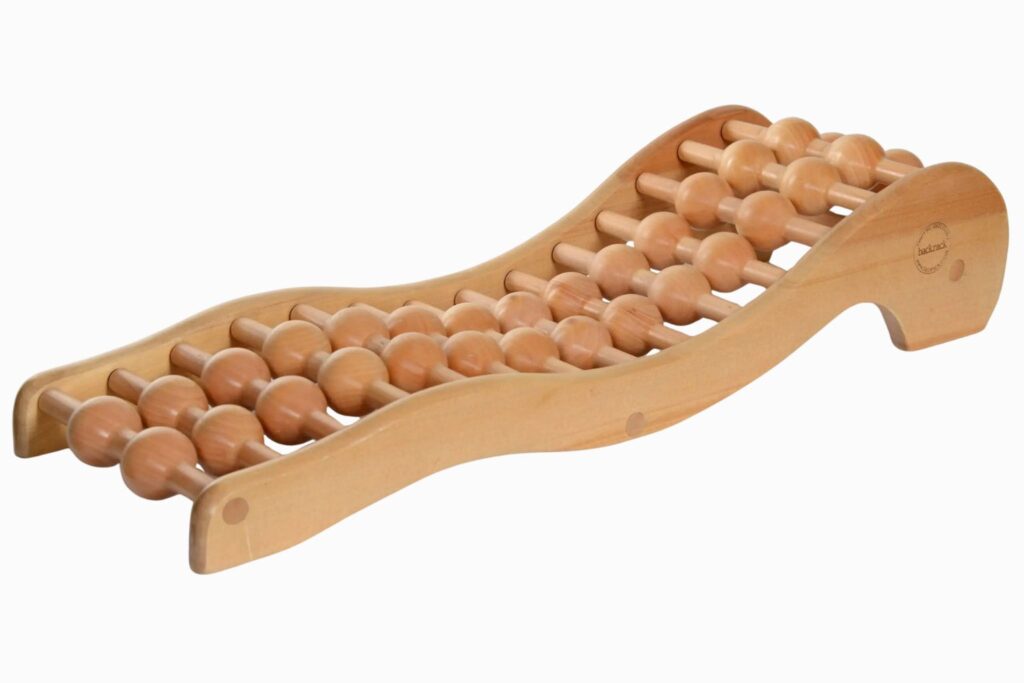
Gently decompresses your spine to target a root cause of back pain, not just the symptoms. Backed by 45+ years of clinical experience.
"The Backrack has been a game changer for my lower back pain. I use it every day!"
Verified Buyer
Gently decompress the spine help relieve pressure and pain
Safe, simple, and effective - use it anytime, anywhere
Short, consistent sessions can make a big difference.
Made with premium materials for long term durability.
See all reviews
Read hundreds of reviews from people just like you.
14-Day Retrurns
No hassle. Oure peace of mind
Free Shipping
US & UK, delivered within 3 days
Secure Checkout
Safe & encrypted payments
Results may vary. Not suitable for everyone (see contradictions). Consult your healthcare professional before use if you have a medical condition.
Unsure which protocol you need? Select your symptoms for a clinical recommendation.