If you are reading this, you are likely in a significant amount of pain. A slipped or herniated disc can bring your entire life to a sudden halt.
Simple tasks like tying your shoes, sitting at your desk, or trying to sleep can feel completely agonizing.
When the pain flares up, your first instinct is to find a quick fix. You are probably wondering how to get a slipped disc back into place as fast as possible so you can just get back to normal.
However, your spine is not like a dislocated shoulder. You cannot simply force or “pop” a spinal disc back into its original position. Trying to do so can actually cause permanent nerve damage.
The good news is that you do not necessarily need surgery. You can encourage the disc to heal naturally. You just need to understand the mechanics of your spine and use the right tools to take the pressure off your nerves.
Here is the complete clinical guide to safely treating a slipped disc at home.
What Actually Happens When a Disc "Slips"?
To fix the problem, you need to know what is actually happening in your back.
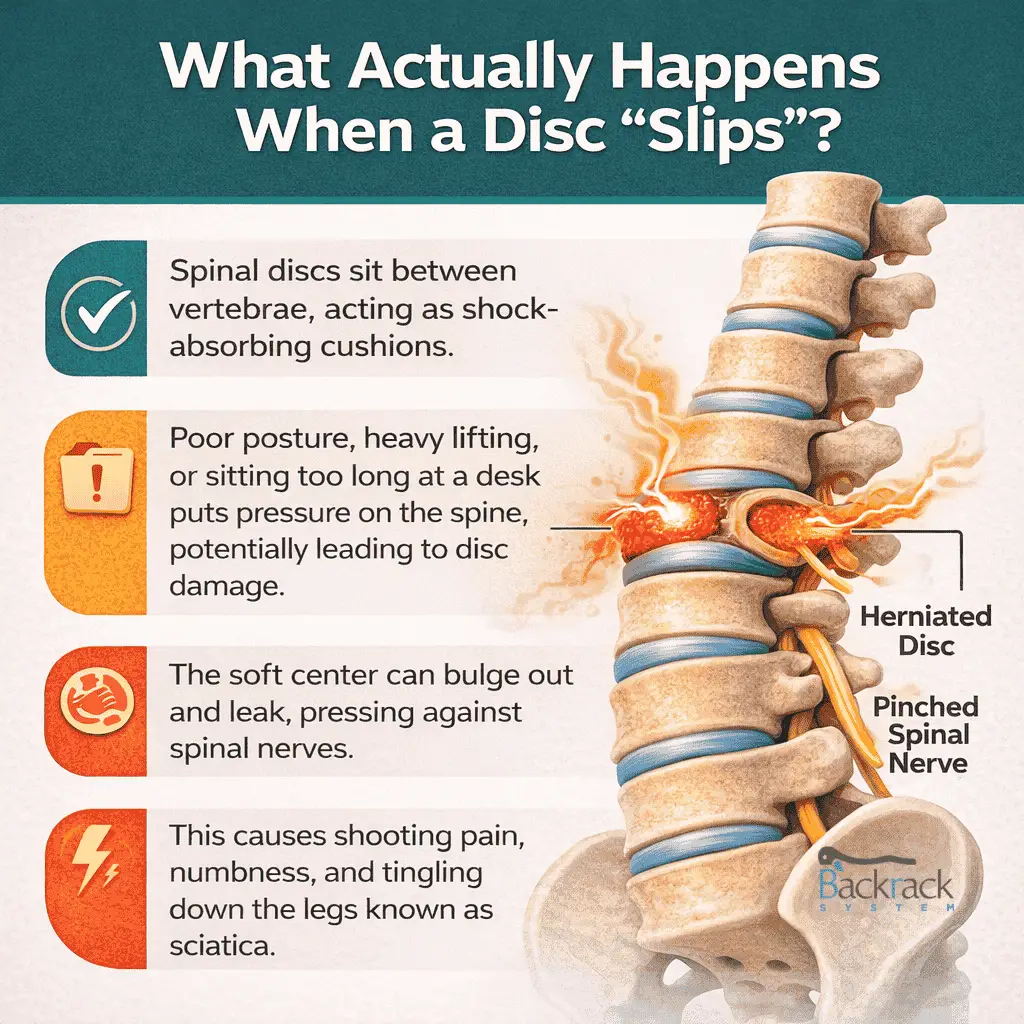
Your spine is made up of individual bones called vertebrae. Between each bone is a soft, shock-absorbing cushion known as a spinal disc.
You can think of these discs like jelly donuts. They have a tough outer ring and a soft, gel-like center.
Years of poor posture, heavy lifting, or sitting at a desk can put immense pressure on your spine. This constant compression squeezes those discs. Eventually, the tough outer ring tears. The soft “jelly” inside leaks out.
We call this a herniated or slipped disc.
The leaked disc material pushes directly against your highly sensitive spinal nerves. This is what causes the shooting pain, numbness, and tingling down your legs known as sciatica.
Why Traditional "Quick Fixes" Fail (and Can Cause Damage)
When people are in desperate pain, they often try the wrong methods to find relief. Many popular remedies actually make a slipped disc much worse.
The Danger of Bending and Twisting
Your first instinct might be to stretch your back aggressively. You might try twisting your torso or doing deep toe touches.
This is highly dangerous for a herniated disc. Twisting adds shear force to your spine. This can tear the outer ring of your disc even further and squeeze more fluid onto your nerve root.
Why Foam Rollers Compress Instead of Decompress
Many people buy cheap foam rollers to roll out their back pain. Foam rollers are excellent for massaging tight muscles. However, they are terrible for spinal joints.
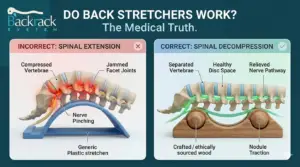
A foam roller is a flat, hard cylinder. When you lie on it, the roller pushes directly against your spinous process. Those are the bumpy bones sticking out of the middle of your back. This pushes your joints together instead of pulling them apart.
The Risks of Inversion Tables
Inversion tables are very popular. They require you to strap in your ankles and hang completely upside down.
While this does provide some stretching, it comes with major side effects. Hanging upside down spikes your blood pressure. It also places a severe and unnatural strain on your ankles and knees. There is a much safer way to decompress your spine while lying flat on the floor.
The Science: How to Get a Slipped Disc Back Into Place Naturally
You cannot push a disc back in from the outside. You have to pull it back in from the inside.
The only safe, proven way to do this is through a process called negative pressure.
Imagine a vacuum. When you gently pull two spinal bones apart, you create a tiny vacuum inside the joint space. This suction effect actually pulls the leaked disc fluid back inside the tough outer ring.
This process is called spinal decompression for a bulging disc. It takes the pressure off the pinched nerve. It stops the shooting sciatica pain. It allows your body to finally heal the tear.
Learning how to get a slipped disc back into place is entirely about applying consistent, safe decompression to your spine.
Using True Spinal Decompression to Retract the Disc
You do not need to spend thousands of dollars at a clinical therapy center to achieve this negative pressure. You can perform safe slipped disc treatment at home with the right medical device.
This is exactly why the spinal decompression device by Spinal Backrack™ was invented by leading Harley Street specialists.
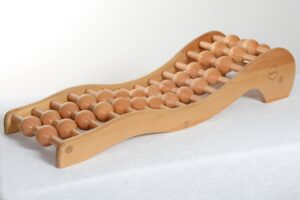
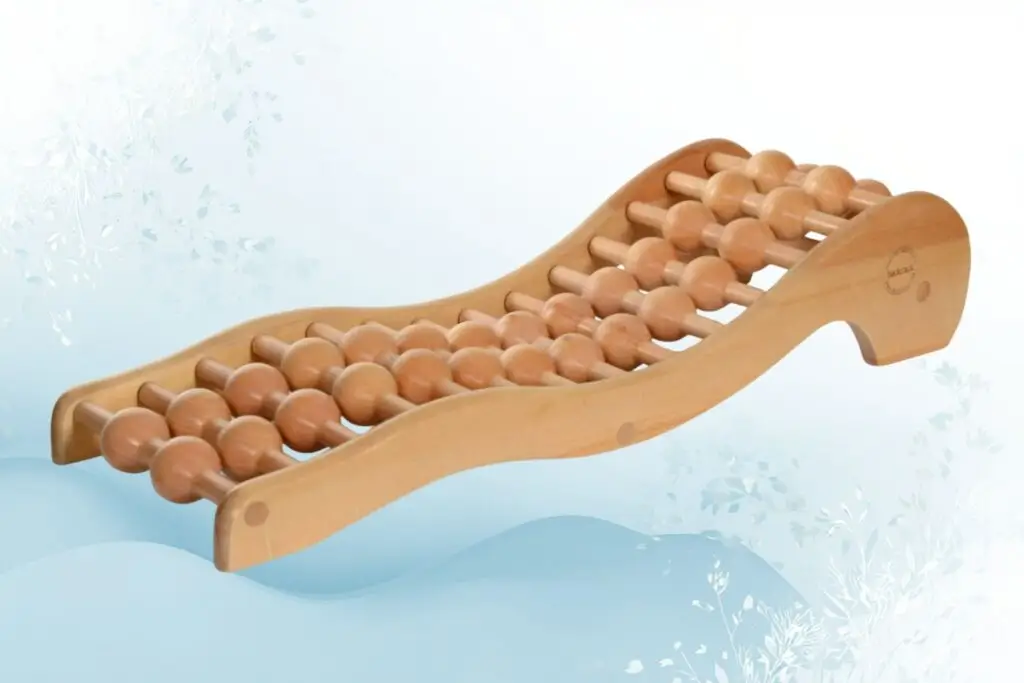
Unlike flat foam rollers or generic plastic arches, the Backrack is engineered to respect your actual bone structure. It features a unique suspended spinal canal.
When you lie on the Backrack, your central bumpy bones safely float in the open center channel. They take zero pressure. Meanwhile, the wooden nodules gently press up under your facet joints.
This precise upward pressure safely separates your vertebrae. It decompresses your spine, creates that vital negative pressure, and allows your disc to naturally retract.
-

Backrack™ – Spinal Decompression Device
£300.00 Select options This product has multiple variants. The options may be chosen on the product page -

Backrack and Backrack Lumbar Belt Combo Offer
£350.00 Select options This product has multiple variants. The options may be chosen on the product page
Slipped Disc Treatment Using The Backrack Technology
A Daily Routine for Slipped Disc Recovery
Healing a spinal injury takes consistency. You are fighting against gravity and your own body weight every single day.
For the fastest recovery, you need a daily routine that protects your spine around the clock.
- At Night: Use the Spinal Backrack for 10 to 15 minutes before bed. Lying flat and breathing deeply allows the wooden nodules to completely decompress your joints after a long day of standing or sitting.
- During the Day: Sitting at a desk is the worst thing you can do for a slipped disc. Wear a medical-grade lumbar decompression belt while you work or drive. This actively supports your lower back and prevents your vertebrae from crushing the healing disc.
Frequently Asked Questions About Slipped and Herniated Discs
You should never try to “pop” a disc back into place. Your spine is not designed to be forcefully manipulated that way. Aggressive cracking can severely worsen a disc herniation. The only safe method is to use passive spinal decompression to let the disc naturally retract on its own.
Resting in bed is not enough to fix a herniated disc. Your body needs active help to relieve the nerve pressure. The best at-home treatment involves using a Class I Medical Device like the Backrack to decompress your spine daily. This removes the mechanical pressure and allows the tissue to heal.
Yes. The L4 and L5 vertebrae are located in your lower back. This is the most common area for disc bulges and sciatica. Your body is fully capable of reabsorbing the bulging material and returning to normal. However, you must stop compressing the area through bad posture and start daily decompression therapy.
Chiropractors can offer excellent temporary pain relief. However, aggressive manual adjustments and deep twisting can sometimes irritate an acutely herniated disc. Many patients prefer gentle, horizontal decompression devices because they offer a much safer, predictable, and controllable environment for recovery.

Take Control of Your Spinal Health Today
Living with chronic nerve pain is exhausting. You do not have to accept it as your new normal.
Figuring out how to get a slipped disc back into place does not require risky surgeries or endless cycles of painkillers. It simply requires you to address the root cause of the problem. By separating the joints and removing the compression, you give your body the exact environment it needs to heal.
If you are currently comparing different options on the market, we highly recommend reading our complete clinical breakdown to help you find the best spinal decompression device for your specific type of back pain.
Stop managing your symptoms and start treating the cause.
Latest articles: