Back Pain From Horse Riding: Causes, Symptoms, Stretches and Safe Relief Options
Published on
If you ride often, you probably know the feeling. You finish a session, hop off the horse, and the moment your feet touch the ground you feel that familiar stiffness or ache in your lower back. You are definitely not alone. Back pain from horse riding affects both beginners and seasoned riders, and it usually shows up because the spine works much harder than most people realize.
Riding is beautiful, demanding, and incredibly complex. Every stride your horse takes travels upward into your pelvis and spine. When the body is strong, aligned, and flexible, this movement feels smooth. When certain muscles are tight or weak, or when the saddle or posture is off, the lower back pays the price. The good news is that with understanding, awareness, and a few simple habits, most riding related back pain can improve significantly.
This guide breaks down why riders get back pain, which spinal structures are involved, and how to stretch and decompress your back safely. Whether you ride weekly or daily, this information can help you stay comfortable, strong, and connected to your horse.
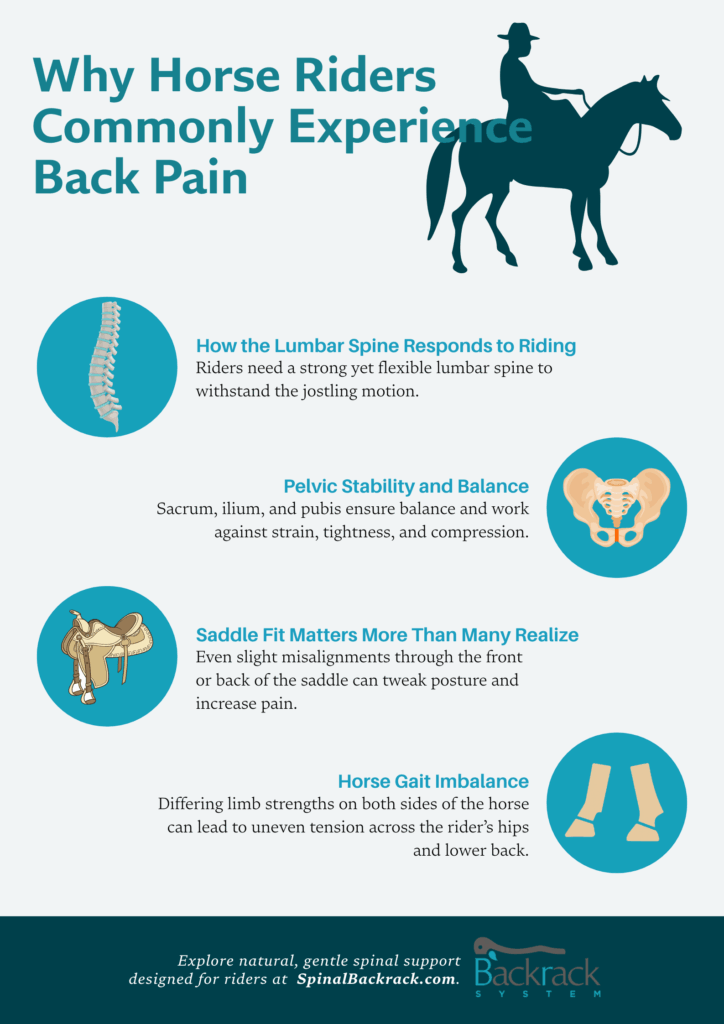
Why Horse Riders Commonly Experience Back Pain
At first glance, riding looks effortless. But inside your body, there is a lot happening. Your core and lower back work constantly to stabilize you against the horse’s movement. The pelvis becomes the shock absorber, and the spine tries to maintain balance through every stride. Over many rides, this can build up into discomfort.
1. How the Lumbar Spine Responds to Riding
The lower spine, especially the L4/L5 and L5/S1 levels, is designed to support weight and absorb force. During riding, these levels take on even more impact. If the deep core muscles are not fully engaged or begin to fatigue, the lower back muscles step in. This extra workload often leads to tightness or compression.
Imagine your spine as a spring. When the spring stays flexible and supported, it handles movement easily. When the surrounding muscles tense up, the spring becomes more rigid, and pressure builds.
2. Pelvic Stability and Balance
Your pelvis acts as the foundation when you sit in the saddle. It tilts and rotates gently with the horse’s gait. If your pelvic stability is not ideal, you may compensate by overusing your lower back muscles. This can create soreness on one side, tightness across the lower back, or even pain around the sacroiliac joints.
Many riders describe this as a “pulling” or “pinching” feeling, especially after long trot sessions.
3. Saddle Fit Matters More Than Many Realize
Even small shifts in saddle fit make a big difference. A saddle placed slightly too far forward or backward can subtly force your spine into an uncomfortable posture. Over time, these small changes can increase pressure on the lumbar spine.
If you have ever noticed increased pain after switching saddles or riding different horses, saddle alignment may be playing a role.
4. Horse Gait Imbalance
Horses have natural asymmetries. If your horse has a stiffer side or prefers one lead over the other, those imbalances transfer to your body. The result is uneven tension across your hips and lower back.
This is why many riders feel pain more on one side than the other.
Common Conditions Linked to Back Pain From Horse Riding
Here are the issues that frequently show up in riders, along with signs you may recognize.
1. L5/S1 Compression
Lower back compression at the L5/S1 level is extremely common in equestrians. When the spine absorbs repeated vertical movement, this area becomes overloaded.
Typical symptoms include:
stiffness after riding
pain when bending forward
aching across the lower back
occasional radiating discomfort into the leg
2. Sciatica From Riding
Sciatica does not always mean a herniated disc. In riders, it often comes from tight hip rotator muscles, especially the piriformis, or from repetitive pressure on the lower spine.
You might feel:
tingling or numbness
sharp glute pain
pain that moves down the back of your leg
3. Sacroiliac Joint Pain
When the pelvis moves unevenly with the horse, the sacroiliac joints can become irritated. This usually shows up as pain on one side of the lower back or deep in the hip.
4. Muscle Imbalances
Riders often have strong adductors but underactive deep core muscles. This imbalance shifts too much work to the lower back.
5. Posture Fatigue
Even advanced riders experience fatigue. When the core gets tired, posture collapses slightly, the pelvis loses alignment, and the lumbar spine absorbs more force.
A Closer Look at Riding Biomechanics
When a horse trots, each stride creates a subtle upward force that moves through the rider’s spine. If your core and pelvis are aligned, your body absorbs this gracefully. If not, the lumbar spine becomes the primary shock absorber.
Over time, this adds up. You might notice tightness after a long ride, difficulty straightening up afterward, or a feeling of pressure on one side. These are common early signs of muscular fatigue and mechanical stress.
Knowing how your body responds to movement gives you a head start in preventing pain.
Two Rider Testimonials
Effective Stretches for Reducing Back Pain From Horse Riding
Stretching helps release tension in the muscles that support the spine. These stretches are simple, effective, and based on common patterns seen in riders.
1. Hip Flexor Stretch
Tight hip flexors can tilt the pelvis forward and increase pressure on the lower back.
How to do it:
Move into a lunge position
Drop your back knee
Gently press your hips forward
Hold 20 to 30 seconds per side
2. Knee to Chest Stretch
Helps reduce lumbar stiffness and gently decompresses the spine.
3. Piriformis Stretch
Great for riders who experience sciatic type pain.
4. Child’s Pose
A relaxing way to open the lower back and release tension.
5. Cat and Cow Mobilization
Improves spinal mobility and reduces muscle tightness.
6. Side Bend Stretch for QL
Your QL muscles work constantly during riding. Stretching them helps restore balance.
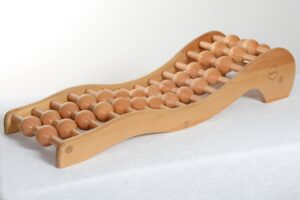
This system promotes gentle spinal decompression and is especially helpful for riders who experience tightness after riding, L5/S1 discomfort, or early sciatica symptoms.
Helpful Prevention Tips
Warm up before riding
Strengthen your deep core muscles
Stretch regularly
Check saddle fit often
Correct horse gait imbalances
Use a decompression tool when needed
Managing Back Pain From Horse Riding Safely and Effectively
Back pain from horse riding is extremely common, but it is not something you have to accept. With better understanding, proper stretching, improved posture, and natural spinal support, you can enjoy riding without constant discomfort. When you take care of your back, your body moves more freely and your connection with your horse becomes even stronger.
Yes, it is very common. Riding requires your core and lower back to stabilize your body through every stride. Over time, this constant movement can strain the lumbar spine, especially if posture, strength, or saddle fit are not optimal.
Your lower back absorbs a large amount of impact from the horse’s movement. Tight hip flexors, weak deep core muscles, poor saddle placement, or an uneven horse gait can all increase pressure on the lumbar spine and lead to soreness.
Yes. Repetitive spinal compression, tight hip muscles, or instability in the pelvis can irritate the sciatic nerve. Riders often notice radiating or sharp discomfort down one leg when this occurs.
Stretch regularly, strengthen your core, check saddle fit, and improve pelvic alignment. Many riders also find relief from daily spinal decompression or mobility work to reduce pressure on the lumbar discs.
Safe, Natural Ways to Reduce Back Pain From Horse Riding at Home
Sign up our newsletter to get article update about backrack therapy.
Fill out the form, and we’ll get back to you within 24 hours with more details!
We use cookies to ensure that we give you the best experience on our website. If you continue to use this site we will assume that you are happy with it.