Sciatica vs Piriformis Syndrome: How to Tell the Difference (With Tests & Treatment)
Published on
Sciatica vs piriformis syndrome is a comparison many people search for when pain begins in the lower back or buttock and travels down the leg. The symptoms can feel similar, yet the underlying causes are different, which is why choosing the right approach to care matters.
Understanding the difference between these two conditions can help you avoid ineffective treatments, reduce frustration, and take steps that better support recovery. In this guide, we will explain how they differ, how clinicians tell them apart, and what treatment strategies are commonly recommended.
Quick Answer: Is It Sciatica or Piriformis Syndrome?
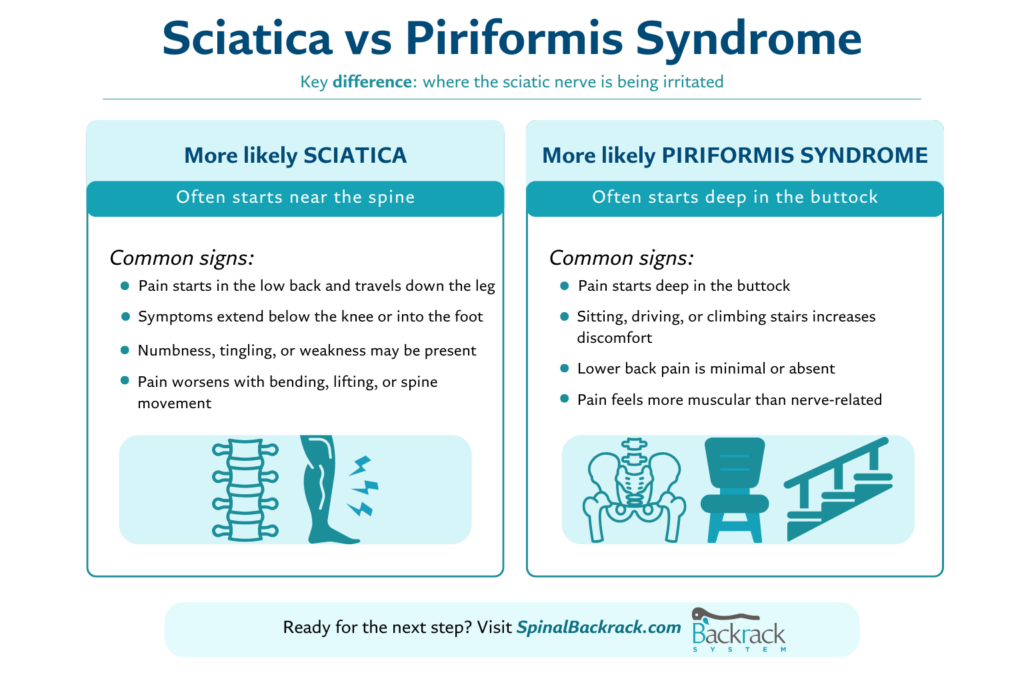
When comparing sciatica vs piriformis syndrome, the key difference is where the sciatic nerve becomes irritated.
You may be dealing with sciatica if:
The pain starts in the low back and moves down into the leg
Symptoms extend below the knee or into the foot
Numbness, tingling, or weakness are present
Pain worsens with bending, lifting, or spinal movement
You may be dealing with piriformis syndrome if:
Pain is centered deep in the buttock
Sitting, driving, or climbing stairs increases discomfort
Lower back pain is minimal or absent
Pain feels more muscular than neurological
What Is Sciatica?
Sciatica is not a diagnosis itself but a set of symptoms caused by irritation or compression of the sciatic nerve, most often near the spine.
Common causes of sciatica
Herniated or bulging lumbar discs
Spinal stenosis
Degenerative disc changes
Vertebral alignment issues
When spinal nerve roots are compressed, pain may radiate from the lower back through the buttock and down the leg.
What Is Piriformis Syndrome?
It’s piriformis syndrome when that deep buttock muscle presses on the sciatic nerve and triggers pain or tingling.
Unlike spinal sciatica, this condition originates in the hip and gluteal region rather than the spine.
Anatomy: Why These Conditions Are Often Confused
The sciatic nerve runs from the lower spine, through the pelvis, and down the leg. Because it passes close to the piriformis muscle, irritation can occur either at the spine or in the deep gluteal region.
This overlap explains why sciatica vs piriformis syndrome is frequently misidentified without proper assessment.
Symptoms: Key Differences to Watch For
Sciatica commonly radiates below the knee and may reach the foot
Piriformis-related pain often stays in the buttock or upper thigh
Trigger patterns also differ. Spinal movement tends to worsen sciatica symptoms, while sitting and hip rotation more often aggravate piriformis-related pain.
Simple Self-Checks You Can Do at Home
These checks cannot diagnose sciatica vs piriformis syndrome, but they can help identify patterns worth discussing with a clinician.
Track where pain begins and ends
Note whether symptoms worsen with spinal bending or hip rotation
Observe how sitting versus walking affects discomfort
Stop if symptoms worsen or neurological signs appear.
Clinical Tests Used to Tell Them Apart
Healthcare providers rely on movement-based assessments to differentiate sciatica vs piriformis syndrome.
Straight Leg Raise Test
Pain reproduction during this test often points to spinal nerve root involvement.
FAIR Test
This hip-based test may reproduce symptoms linked to piriformis-related sciatic nerve irritation.
Imaging
Imaging may identify spinal causes but is often used to rule out other conditions rather than confirm piriformis syndrome.
When It Is Not Either Condition
Other issues can produce similar symptoms, including:
Sacroiliac joint dysfunction
Hip joint disorders
Hamstring tendinopathy
Deep gluteal syndrome
Persistent or worsening pain should always be evaluated.
Red Flags: When to Seek Medical Care
Seek medical care promptly if you experience:
Progressive leg weakness or foot drop
Loss of bladder or bowel control
Severe or escalating pain
Fever, unexplained weight loss, or recent trauma
Treatment Approaches
Treatment depends on whether symptoms stem from spinal compression or muscular irritation.
Sciatica-focused care
Activity modification and guided movement
Physical therapy focused on spinal mechanics
Anti-inflammatory strategies when appropriate
Piriformis-focused care
Reducing prolonged sitting
Gentle stretching and hip strengthening
Gradual return to activity
Exercises and Movement Considerations
For spinal-related symptoms:
Short walks
Gentle core stability exercises
Light nerve mobility work
For piriformis-related symptoms:
Controlled piriformis stretching
Hip and glute strengthening
Mobility work focused on the hips
All exercises should remain comfortable and controlled.
Prevention: Reducing Recurrence
Break up sitting time throughout the day
Maintain hip and spinal mobility
Strengthen the core and glutes
Pay attention to posture and daily movement habits
Where Spinal Decompression May Help
When spinal compression contributes to symptoms, gentle decompression may help reduce pressure on spinal structures.
Used appropriately, it can support symptom management for some people dealing with sciatica vs piriformis syndrome, alongside movement and strengthening.
Professional guidance is recommended when symptoms are severe or unclear.
Explore At-Home Sciatica Support Options
Understanding sciatica vs piriformis syndrome can help guide which at-home tools may be appropriate. Spinal decompression devices like Backrack are designed to support gentle unloading of the spine as part of a balanced spine care routine.
These tools are intended to complement, not replace, professional care.
Side sleeping with proper support or maintaining a neutral spinal position often reduces strain.
Making the Right Decision for Long-Term Relief
A clear understanding of sciatica vs piriformis syndrome allows you to move away from guesswork and toward more effective care decisions. By recognizing symptom patterns, understanding triggers, and combining professional guidance with responsible at-home strategies, you can better support long-term spinal and nerve health.
Sign up our newsletter to get article update about backrack therapy.
Fill out the form, and we’ll get back to you within 24 hours with more details!
We use cookies to ensure that we give you the best experience on our website. If you continue to use this site we will assume that you are happy with it.