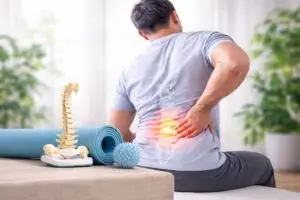
Who Is Spinal Decompression Best For? And Who Should Avoid It

If you are asking who is spinal decompression best for, you are already doing the smartest thing you can do: pausing to make sure it fits your symptoms, your comfort level, and your safety. Spinal decompression can be a helpful part of an at-home routine for certain patterns of back and leg discomfort, but it is not for everyone, and it is not something you should force.

This guide will help you quickly figure out whether decompression is likely a good match for you, who should avoid it (or get checked first), what results to expect, and how to start gently and safely.

Important: This article is educational, not medical advice. If you have severe symptoms, symptoms that are getting worse, or any red flags listed below, get evaluated by a qualified healthcare professional.

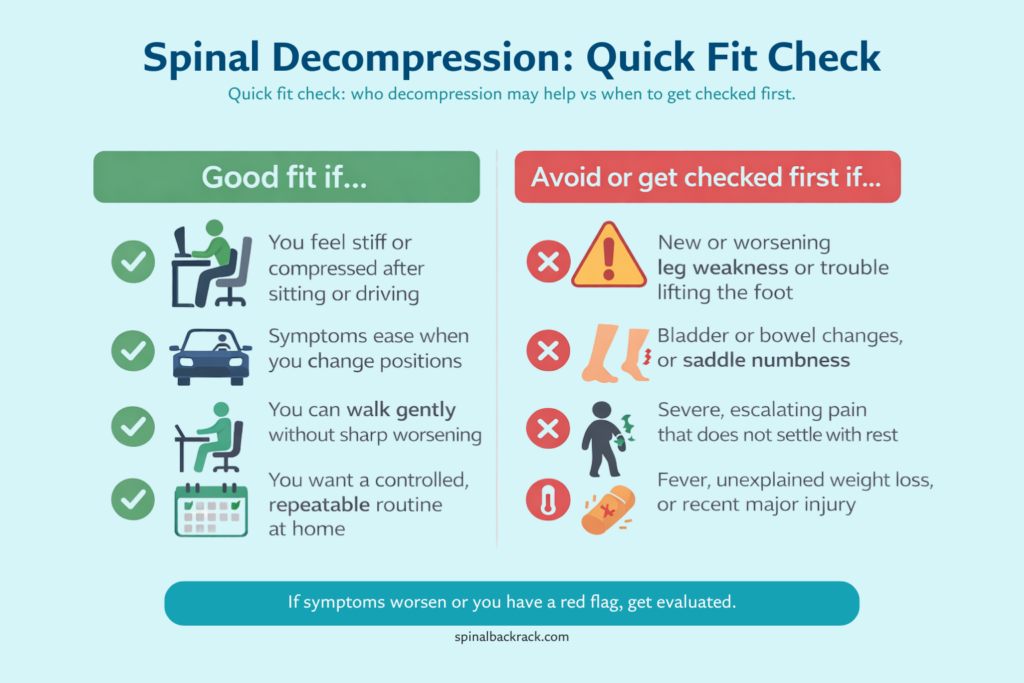
spinal decompression quick fit check infographic

Quick Summary

Spinal decompression may be a good fit if you:

  • Feel stiff or compressed after sitting, driving, or standing
  • Get some relief when you change positions or walk gently
  • Can tolerate light, controlled movement without sharp worsening
  • Want a simple routine you can repeat consistently at home

Avoid decompression for now and get checked urgently if you have:

  • Loss of bowel or bladder control
  • Saddle numbness (numbness around groin or inner thighs)
  • New or worsening weakness, foot drop
  • Severe pain that is not changing with position
  • Recent major trauma or suspected fracture
  • Fever, unexplained weight loss, or history of cancer with new symptoms

If you’re still deciding who is spinal decompression best for, our spinal decompression device can support a gentle, repeatable at-home routine.

What spinal decompression is (and what it is not)

Spinal decompression is a gentle approach that aims to reduce pressure and tension through the lower back by “unloading” the spine. People often describe it as a feeling of lengthening, relief, or a mild stretch combined with relaxation.

If you want a quick overview of what it is and what it is not, see our spinal decompression therapy explained guide.

What it is:

  • A controlled way to reduce compression and stiffness
  • Often used as part of a broader plan that includes walking, mobility, and strengthening
  • Usually most helpful when done gently and consistently

What it is not:

  • Not a guaranteed fix for every type of back pain
  • Not the same as forcing deep stretches
  • Not something that should increase sharp radiating pain
  • Not a replacement for movement, strength, and good daily habits

There are many ways decompression can be done, including clinical traction, physical therapy techniques, and at-home decompression routines. The method matters, but so does the person. That is why the “who is it best for” question is so important.

Who is spinal decompression best for?

Below are the most common “good fit” patterns. You do not need to match all of them. If a few sound like you and you can do gentle unloading without worsening symptoms, decompression may be worth trying as part of a broader routine.

Who is spinal decompression best for: people who feel compressed from sitting or driving

This is one of the most common groups.

You might relate if:

  • You feel tight or “jammed” after sitting
  • You feel worse after long drives
  • You feel better after getting up and moving for a few minutes
  • Your low back feels stiff at the end of the day

Why decompression may help:

  • Sitting can increase pressure through the lower back
  • Gentle unloading can reduce that “compressed” feeling and calm muscle guarding

Best approach:

  • Short sessions, low intensity, consistent
  • Pair with short walks and posture breaks

Who is spinal decompression best for: people who get relief when they change positions

This is a big clue that your symptoms are “position sensitive.”

You might relate if:

  • Lying down changes your symptoms
  • Certain positions make it noticeably better or worse
  • Light walking helps, but heavy activity flares it

Why decompression may help:

  • If your symptoms improve with position changes, gentle unloading often fits well
  • You are more likely to tolerate a controlled routine

Best approach:

  • Do not chase intensity
  • Use decompression as a reset, not a workout

Who is spinal decompression best for: some people with sciatica-like patterns that calm with unloading

Sciatica-like symptoms can include buttock pain, tingling, burning, or pain that travels down the leg. Decompression may help some people, especially if symptoms calm when pressure is reduced.

You might relate if:

  • Symptoms are worse after sitting and improve when you walk gently
  • You can find a position that reduces symptoms
  • Symptoms are stable and not rapidly worsening

Important caution: If decompression makes symptoms sharply worse or causes the pain to travel farther down the leg, stop and reassess.

Best approach:

  • Start very gently
  • Keep sessions short
  • Focus on relaxation and breathing

Who is spinal decompression best for: some people with disc-related discomfort patterns (when stable)

Some people describe their pain as “disc-related,” often with sitting sensitivity and irritation from bending or lifting. Decompression can be helpful for some, but only when it is gentle and symptoms are stable.

You might relate if:

  • Sitting tends to irritate symptoms
  • Bending forward repeatedly makes it worse
  • Coughing or sneezing can aggravate symptoms
  • You are currently in a calmer phase, not a severe flare

Best approach:

  • Keep it gentle
  • Avoid forcing end ranges
  • Combine with careful movement habits and walking

Who is spinal decompression best for: people who want a simple, repeatable at-home routine

This matters more than most people think. A routine that is “pretty good” but done consistently often beats a routine that is “perfect” but rarely done.

You might relate if:

  • You struggle to stick with stretching or mobility
  • You want a structured routine that feels doable
  • You want a calm, low-impact habit

Best approach:

  • Consistency first
  • Short sessions done often
  • Track how you feel over time, not just after one session

Who should avoid spinal decompression (or get checked first)

This section is here to protect you, and to help you make an informed decision.

Do not do decompression until medically cleared

Seek urgent evaluation if you have any of these:

  • Loss of bowel or bladder control
  • Saddle numbness
  • Weakness that is getting worse in the leg, ankle, or foot
  • Severe pain that does not change with position
  • Recent major trauma, suspected fracture
  • Fever or signs of infection
  • Unexplained weight loss, history of cancer with new severe symptoms

These are red flags that need professional assessment.

Be cautious and speak to a clinician first

Decompression may still be possible for some people, but you should not guess.

Talk to a clinician if you have:

  • Severe osteoporosis or high fracture risk
  • Known spinal instability
  • Recent spinal surgery (unless cleared)
  • Progressive neurological symptoms
  • Severe, worsening pain patterns
  • Any condition specifically listed as a warning in your device instructions

When in doubt, it is better to get guidance than to push through.

Quick self-check: signs decompression is a good fit

Use this as a simple, practical guide. It is not a diagnosis.

Green flags: good signs

  • You feel at least some relief when you change positions
  • Your symptoms improve after gentle walking
  • You can relax and breathe during unloading
  • Your symptoms do not sharply worsen during or after a short trial
  • Your pain feels more like stiffness, pressure, or compression than a sharp “electric” flare

Yellow flags: be cautious and go slower

  • You have sciatica-like symptoms and they flare easily
  • You are currently in an acute flare
  • You are unsure what movements trigger symptoms
  • You tend to push too hard

If this is you, start with very short sessions and track your response.

Red flags: stop and reassess

  • Pain becomes sharper or more intense during decompression
  • Pain radiates farther down the leg
  • Tingling or numbness increases
  • You feel new weakness
  • Symptoms worsen for hours afterward

If any of these happen, stop and consider medical evaluation.

How long it takes to feel a difference

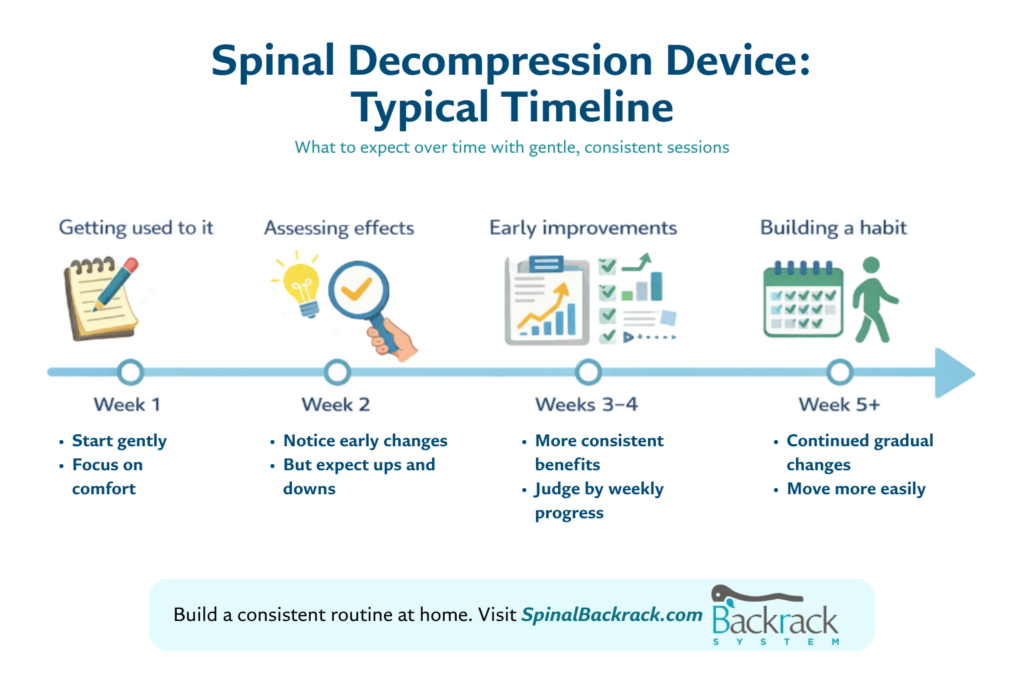
This is where many people get frustrated. They try one session, do not feel “fixed,” and give up. Decompression is usually not an instant cure. It is more like a habit that can gradually reduce stiffness, calm sensitivity, and improve tolerance over time.

A realistic timeline looks like this for many people:

After the first session

Possible improvements:

  • A sense of relaxation
  • Temporary reduction in tightness
  • Easier movement for a short window

Possible non-improvement: No big change, especially if you are very irritated that day

After 1 week of consistent practice

Possible improvements:

  • Less “end of day” stiffness
  • Better movement tolerance
  • Slightly easier sitting or standing

After 2 to 4 weeks

Possible improvements:

  • Fewer flare ups
  • Better baseline comfort
  • Better ability to walk or move without triggering symptoms

After 6 to 8 weeks

Possible improvements:

  • More stable progress if you combine decompression with movement habits
  • Improved resilience to sitting and daily load

Why results vary:

  • The underlying cause may differ (disc sensitivity, joint irritation, muscle guarding, nerve irritation)
  • Consistency matters
  • Sleep, stress, and overall activity load matter
  • Doing too much too fast can backfire

How to start safely with an at-home decompression routine

This is the simple approach that fits most people.

Rule 1: Start gentle

Do not chase intensity. A mild session done consistently is often better than a “hard” session done rarely.

Rule 2: Stop if symptoms clearly worsen

Discomfort is not the same as sharp, radiating pain. If symptoms intensify or spread, stop.

Rule 3: Pair decompression with movement

Decompression works best when combined with:

  • Short walks
  • Light mobility
  • Gradual strengthening when appropriate

A simple 7-day beginner plan

Day 1 to 3:

  • Short, gentle sessions
  • Focus on slow breathing and relaxation
  • Stop if symptoms worsen

Day 4 to 7:

  • Slightly longer sessions only if you tolerated days 1 to 3 well
  • Add short walks daily if tolerated
  • Track what improves symptoms and what triggers them

Week 2 and beyond:

  • Keep it consistent
  • Increase gradually
  • Focus on making the routine easy to repeat

Where our decompression device fits (and who it is best for)

An at-home decompression device can be helpful if you want a controlled, repeatable routine without needing appointments or complicated setups. The key is to use it as part of a calm plan, not as a “more is better” solution.

Most readers start with the Backrack device. The combo is optional if you want added lumbar support.

 Tip: Start gently. Consistency matters more than intensity.

Our device tends to be a good fit for people who:

  • Feel compressed after sitting or driving
  • Want a simple routine they can repeat consistently
  • Prefer controlled, gentle unloading instead of aggressive stretching
  • Want to build a habit that supports comfort and mobility

How it supports your routine:

  • Makes it easier to be consistent at home
  • Helps you keep sessions controlled and gradual
  • Encourages a calm “reset” approach rather than chasing intensity

Safety reminder: If you have red flags, severe symptoms, or significant medical risk factors, get evaluated before attempting decompression at home.

Quick Answers and Next Steps

It is usually best for people who feel compressed or stiff from sitting, and who get at least some relief when they change positions or walk gently. It tends to work best when done gently and consistently, alongside simple movement habits.

Avoid decompression and get checked urgently if you have loss of bowel or bladder control, saddle numbness, new or worsening weakness, or severe unchanging pain. If you have major risk factors like severe osteoporosis, recent surgery, or worsening neurological symptoms, speak with a clinician first.

It can be safe for many people when it is gentle, controlled, and stopped if symptoms worsen. It is not safe to push through sharp radiating pain, increasing numbness, or new weakness.

Some people feel temporary relief after a session, but meaningful improvement usually takes consistent practice over weeks. Many people notice changes within 2 to 4 weeks, with more stable progress over 6 to 8 weeks when combined with movement habits.

Most people do best with short, gentle sessions performed consistently. Start with a few times per week or daily short sessions if tolerated, then adjust based on your response.

Yes, especially if you do too much too fast, or if your symptoms are highly irritable. If pain intensifies, travels farther down the leg, numbness increases, or weakness appears, stop and get evaluated.

How to start safely this week

If you want a straightforward plan this week:

  1. Reduce long sitting and take frequent breaks
  2. Walk in small, repeatable doses if tolerated
  3. Use a gentle decompression routine daily or several times per week
  4. Add light hip and core work that does not flare symptoms
  5. Track what improves symptoms and what reliably triggers them

If you are still deciding who is spinal decompression best for, use the checklists above, start gently, and choose an at-home routine you can actually stick with.

Further reading:

Fill out the form, and we’ll get back to you within 24 hours with more details!