Spinal Decompression at Home: Is It Safe and Effective?
Published on
Spinal decompression at home has become an increasingly popular option for people looking to relieve back pain, reduce spinal pressure, and improve mobility without frequent clinic visits. With more devices, stretches, and routines available than ever before, many people are asking the same important question: Is it actually safe and effective to decompress your spine at home?
In this guide, we will break down how at-home spinal decompression works, who it may help, potential risks to be aware of, and how it compares to professional spinal decompression therapy. Our goal is to give you clear, practical information so you can decide what makes sense for your body and your situation.
Watch the video below for a step-by-step demonstration of safe, at-home spinal decompression using the Backrack system.
What Is Spinal Decompression?
Spinal decompression is a technique designed to relieve pressure on the spine. Over time, daily activities like sitting, lifting, poor posture, and lack of movement can compress the spinal discs. This compression may contribute to back pain, stiffness, nerve irritation, and reduced flexibility.
Decompression works by gently stretching the spine. This stretch can help create space between vertebrae, reduce pressure on discs, and improve circulation to spinal structures.
In clinical settings, spinal decompression is often performed using motorized traction tables under professional supervision. At home, the approach is more passive and typically relies on body weight, gravity, or controlled stretching.
If you want a deeper understanding of how decompression therapy works in general, we recommend reviewing our main guide on spinal decompression therapy for a complete overview.
What Does Spinal Decompression at Home Mean?
At-home spinal decompression refers to techniques or devices that allow you to apply gentle spinal traction without visiting a clinic. These methods vary in complexity and intensity, but they share the same goal of reducing spinal compression.
Common at-home approaches include:
Inversion tables that use gravity to stretch the spine
Traction devices that apply controlled pulling force
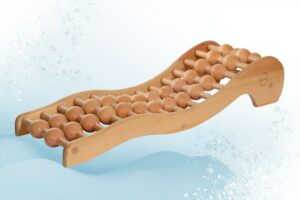
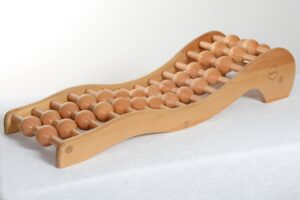
Contoured back stretching devices designed to support spinal extension
Floor-based stretches and decompression exercises
These options are generally designed for maintenance, mobility, and symptom relief rather than intensive treatment. Knowing what these methods can and cannot do plays an important role in using them responsibly.
Is Spinal Decompression at Home Safe?
Safety is often the first question people ask, and it’s an important one to address. While many people use at-home decompression tools without issues, safety depends heavily on the individual and how the method is used.
Factors That Affect Safety
Several factors play a role in whether at-home decompression is appropriate:
Your current spine health and diagnosis
The severity and cause of your back pain
Proper positioning and technique
How well the device is made and how it is designed
People with mild to moderate stiffness, posture-related discomfort, or general spinal compression often tolerate gentle decompression well. Problems are more likely when force is excessive or when decompression is used despite underlying conditions.
When At-Home Decompression May Not Be Appropriate
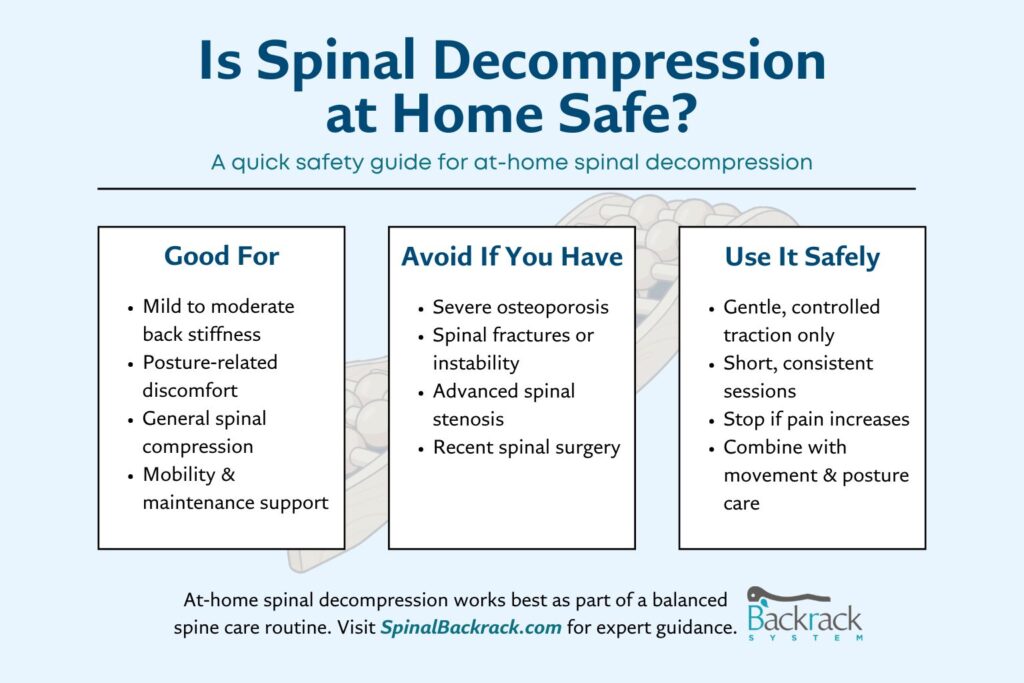
At-home spinal decompression is not recommended for everyone. You should avoid it or seek medical guidance first if you have:
Severe osteoporosis
Spinal fractures or instability
Advanced spinal stenosis
Recent spinal surgery
Unexplained numbness, weakness, or worsening nerve pain
If pain increases during or after decompression, that is a sign to stop and reassess. Decompression should feel relieving, not aggressive or painful.
Is Spinal Decompression at Home Effective?
Effectiveness depends on expectations and consistency. At-home decompression is not designed to replace medical care or correct serious spinal conditions. However, it can be effective as part of a broader spine care routine.
What the Evidence Suggests
Research on spinal decompression shows that reducing spinal load can help improve disc hydration, reduce nerve pressure, and temporarily relieve pain for some individuals.
While clinical decompression allows for precise control, home methods still offer benefits through gentle, repeated unloading of the spine.
What People Commonly Experience
Many users report improvements such as:
Reduced stiffness, especially after long periods of sitting
Temporary pain relief
Improved flexibility and posture awareness
A sense of spinal relaxation and decompression
Results are often gradual and depend on regular use combined with healthy movement habits.
Managing Expectations
It is important to understand what at-home decompression can and cannot do. It may help relieve symptoms, but it does not permanently fix disc damage or structural spinal conditions on its own.
The best results come when decompression is paired with strengthening, mobility work, and posture correction.
Best Practices for Spinal Decompression at Home
Using safe habits can significantly improve results and reduce risk.
How Often Should You Decompress?
Most people benefit from short, consistent sessions rather than long or aggressive ones. A few minutes per day or several times per week is often sufficient, depending on the method used and how your body responds.
These habits help maintain the space created during decompression and support long-term spinal health.
Listen to Your Body
Pain, dizziness, or increased symptoms are signals to stop. Spinal decompression should feel controlled and comfortable. Gradual progress is safer and more effective than pushing too hard.
At-Home vs. Clinical Spinal Decompression
Recognizing how these options differ can guide a more informed choice..
At-home decompression offers convenience, lower cost, and flexibility. It is well-suited for ongoing maintenance and mild symptoms. Clinical decompression provides professional supervision, customized settings, and closer monitoring, which may be necessary for more complex or severe conditions.
Many people use both approaches at different stages of their recovery, depending on their needs.
For many people, it can be a helpful and low-risk way to support spinal comfort when used responsibly.
Is Spinal Decompression at Home Right for You?
Spinal decompression at home can be a safe and effective option for many people when used correctly and with realistic expectations. It works best as part of a balanced approach that includes movement, strength, and posture awareness rather than as a standalone solution.
Sign up our newsletter to get article update about backrack therapy.
Fill out the form, and we’ll get back to you within 24 hours with more details!
We use cookies to ensure that we give you the best experience on our website. If you continue to use this site we will assume that you are happy with it.